Latin name - Sturnus vulgaris
Although still a common sight, Starlings has declined in numbers in recent
years putting it, rather amazingly, on the RSPB's Red List. A gregarious
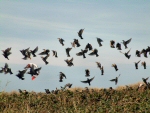
bird, they spend much of the time in flocks, especially when they are
not breeding. These flocks can be huge, many thousands of birds congregating
together to feed; often the flocks combine to roost and have formed huge
roosts of over 1 million birds. The United Kingdom population is swelled
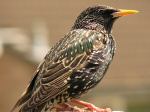
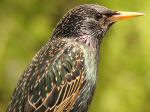
by winter visitors from Europe. Male and females are alike with a glossy,
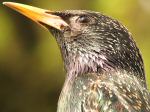
apparently black plumage, which on closer inspection is a mixture of iridescent
blacks, purples and greens. The bill is yellow in summer but turns to
dark grey in winter with the plumage gaining white speckles on the feather
tips. The young are brown in colour with pale, cream throats and white
speckled under-parts. They feed on insects, worms, berries, fruit and
will happily raid a garden bird-table leaving it empty! Starlings are
superb mimics imitating not only the songs of other birds but many man-made
sounds such as telephones, door bells, whistles and alarms. |